A Guide to Kiawah Island’s Sustainable Coastal Development and Environmentally Friendly Home Design Standards
When you walk the grounds of a Kiawah Island home—whether through a corridor of maritime oaks, past a marsh-edge window, or along a shell path that curves naturally around a pond—you’re experiencing a decision that was made decades before that home ever existed. Every inch of Kiawah Island development has been guided by a simple, yet demanding principle: nature leads, and architecture follows.
This philosophy is Designing with Nature. More than a marketing phrase, it is the organizing logic behind fifty years of planning decisions, conservation efforts, and architectural standards that have made Kiawah one of the most recognized examples of sustainable coastal development in the country.
For buyers considering a home here, understanding this philosophy is essential because it explains not just how Kiawah looks but why it holds its value, its beauty, and its sense of place the way it does.
A Blueprint Fifty Years in the Making
The story of Kiawah’s approach to environmentally friendly home design begins in 1974. When the Kuwait Investment Corporation acquired the Island that year and engaged the Sea Pines Company to produce a master plan, the development community faced a genuine question: how do you build a world-class residential community without destroying the very environment that makes it worth living in?
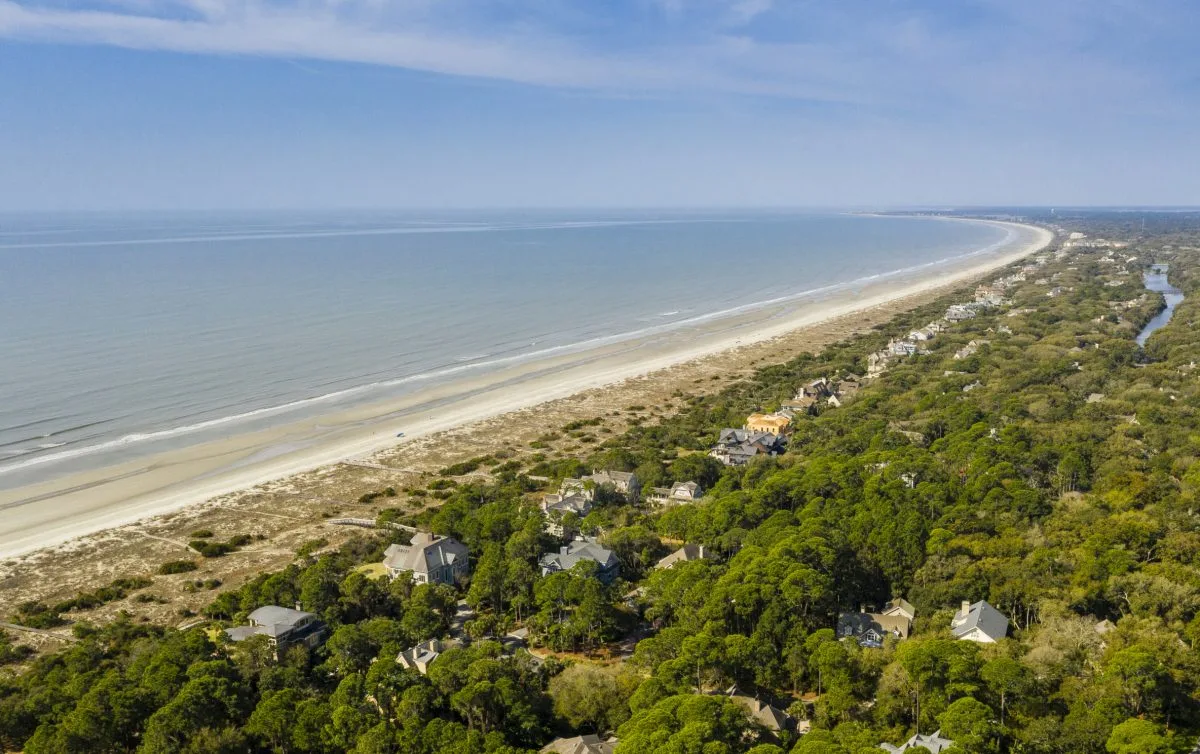
The answer came through rigorous study. In 1975, the Environmental Research Center conducted a 16-month ecological assessment, analyzing aerial photography, soil samples, beach profiles, and maritime forest data, to map the Island’s ecosystems before a single home was designed around them. Maritime forests that cover Kiawah’s core were identified as its most stable ecosystem, and that finding shaped everything that followed.
What emerged was more than a development plan; it was a philosophy that remained constant through multiple changes of ownership and more than five decades of growth. Today, Kiawah Partners serves as the steward of that vision, continuing to balance a thriving residential community with the barrier island ecosystem it calls home.
Related: For a deeper look at how Kiawah’s story has unfolded over the centuries, the Island Insights page traces the full timeline.
The ARB: Where Every Home Earns Its Place
In 1976, the Kiawah Island Company established the Architectural Review Board (ARB) as the practical mechanism for upholding the Designing with Nature standard. Its mandate has never wavered: to achieve an uncommon blend of natural beauty and built environment, and to preserve an ecologically sensitive community for the people who live in it.
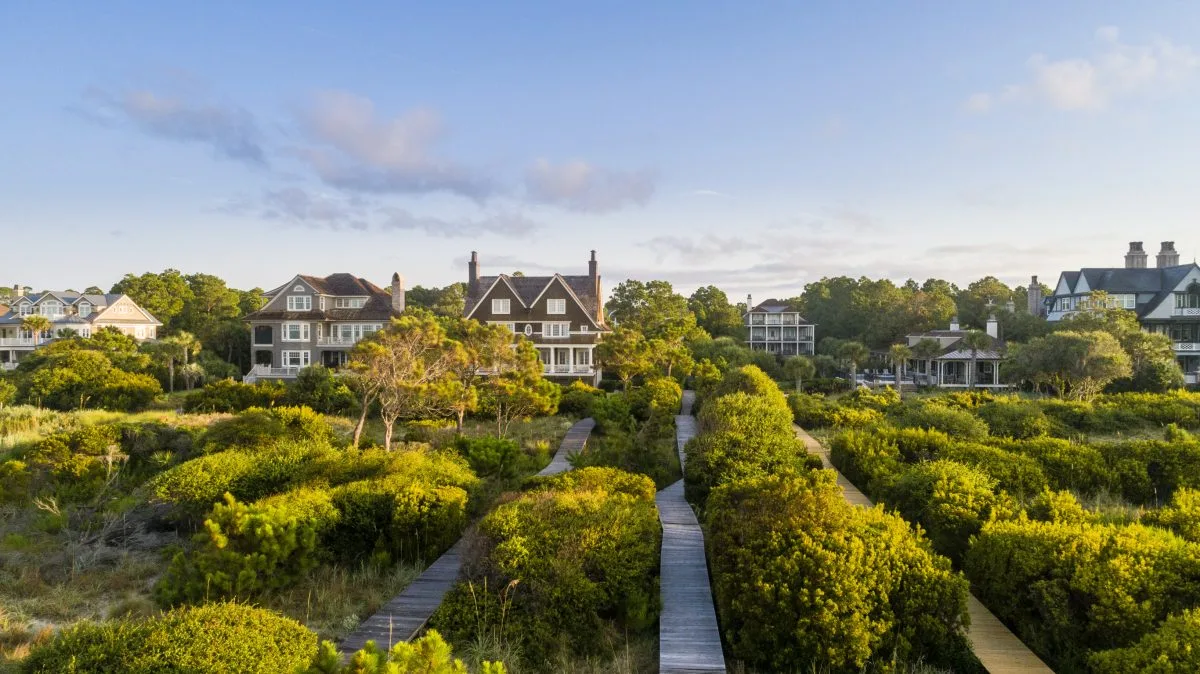
For buyers, this means that every home on Kiawah Island has been designed with the surrounding landscape in mind. Structures are oriented to preserve sight lines and canopy cover. Foliage removal in one area is balanced by thoughtful replanting in another. Deed restrictions, covenants, and ARB guidelines work together to ensure that no home compromises the character of the Island.
Kiawah comprises approximately 5,400 total units, including existing homesites and future entitlements. Whether already built or yet to be developed, every property is subject to a rigorous review process designed to ensure that buildings serve the land rather than simply occupy it. This standard protects not just the Island’s environment, but every homeowner’s investment in it.
Building a Home Within the Philosophy
For many buyers, the most personal expression of the Designing with Nature philosophy is building their own home. Kiawah offers two distinct paths to a custom-built residence, and both are shaped by the same ARB standards that govern the Island’s character.
1. The Custom Journey: Designing with the Land
The ARB review process is designed to sharpen creativity, pushing designs to work in harmony with the contours, canopy, and orientation of each site, rather than against them.
- Site-Specific Mastery: Build a home that feels “grown” from the lot, preserving the maritime forest.
- Expert Guidance: Work with a team that knows the Island’s land and guidelines in depth.
- Total Autonomy: Every detail, from the foundation to the final finish, is a reflection of your vision.
2. The Curated Journey: Designer-Led Residences
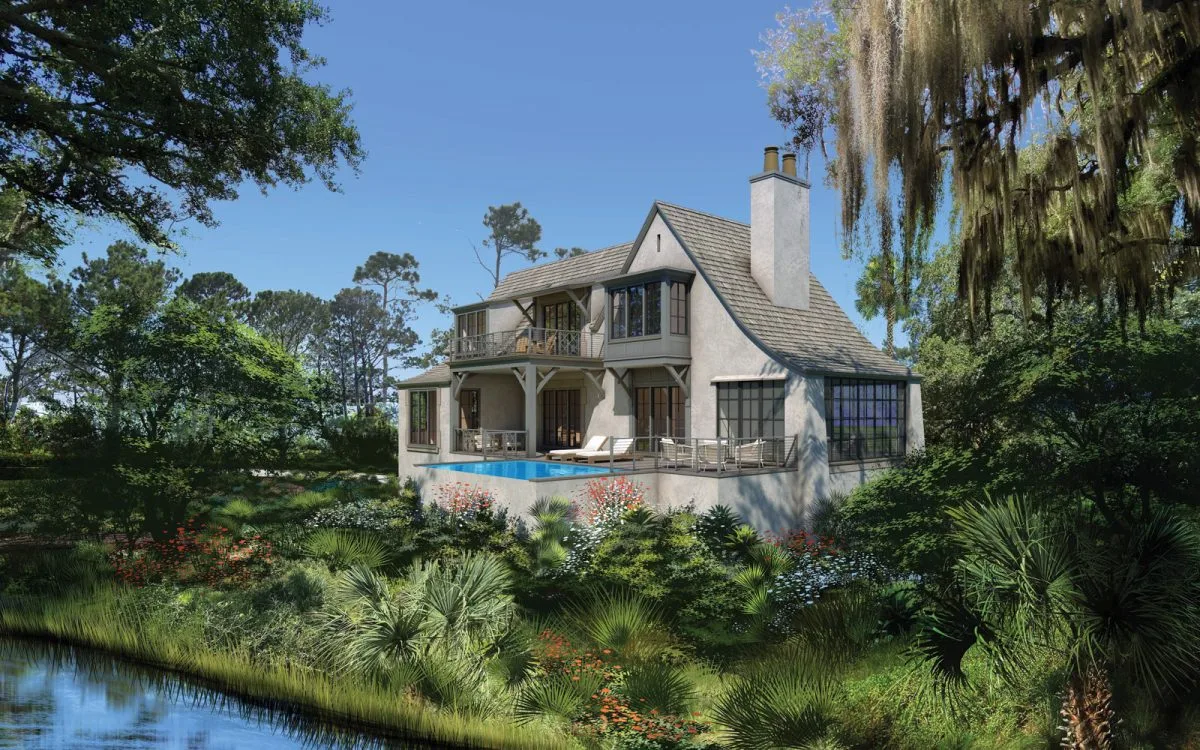
This second path is available in the latest developer releases. Here, buyers select from a range of architectural designs and floor plans suited to their specific neighborhood and personalize from there.
- Immediate Momentum: A shorter timeline than a full custom build without sacrificing design integrity.
- Pre-Vetted Excellence: Designs are already optimized for their environment.
- Final Opportunities: Includes highly sought-after enclaves like Front Nine Lane, Ocean Pines, and the final developer releases in Upper Burn.
A Living Island, and Why That Matters to Owners
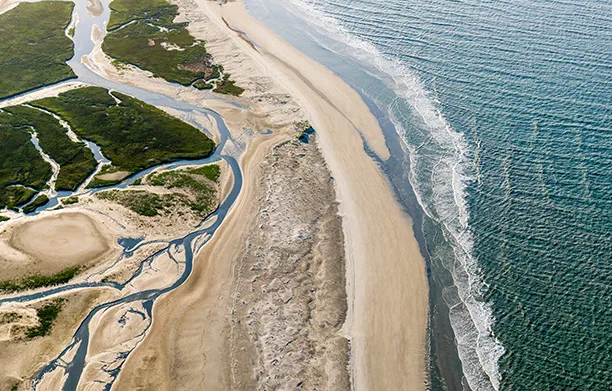
Most barrier islands lose ground to coastal erosion. Kiawah is one of the rare exceptions. Because of the southwestern trajectory of its dominant longshore current, the Island is actually growing in land mass, continuously gaining sand from Folly Beach and the Stono River. The result is some of the healthiest beaches and dunes along the South Carolina coastline.
That health extends across the entire ecosystem. Kiawah is home to 18 species of mammals, more than 30 species of reptiles, and over 300 species of birds. Blue herons and egrets work the marshlands. Dolphins swim the Atlantic shoreline. Outside of designated wildlife refuges, Kiawah is the region’s most prolific nesting area for loggerhead sea turtles, a distinction that draws naturalists and nature lovers from across the country.
Underpinning all of this is the Conservancy of the Sea Islands, a nonprofit established by Island residents in 1997. The Conservancy has preserved more than 52 properties totaling over 2,273 acres of pristine barrier Island, land that will remain wild in perpetuity. This conservation is a direct investment in the long-term livability and desirability of Kiawah as a place to own a home.
What This Philosophy Means When You’re Buying a Home Here
For prospective buyers, the Designing with Nature philosophy answers a question that often goes unasked: what guarantees that Kiawah will still look and feel like Kiawah in 20 years? The answer is that the protections are built into the Island’s foundation, not subject to a single developer’s changing priorities, but embedded in decades of guidelines, conservation land, and community governance.
That permanence shows up in meaningful ways: homes that sit respectfully within their natural settings rather than imposing on them, communities designed for pedestrians and cyclists as much as cars, and a shared commitment among owners, developers, and the Conservancy to steward the Island rather than simply occupy it. The awards Kiawah has earned from the Urban Land Institute, the American Society of Landscape Architects, the SC Department of Natural Resources, and the South Carolina Wildlife Foundation reflect a track record, not an aspiration.
Kiawah’s spring market draws buyers who recognize that this kind of place is genuinely rare. If you’re considering making it home, the best next step is exploring what’s currently available.