
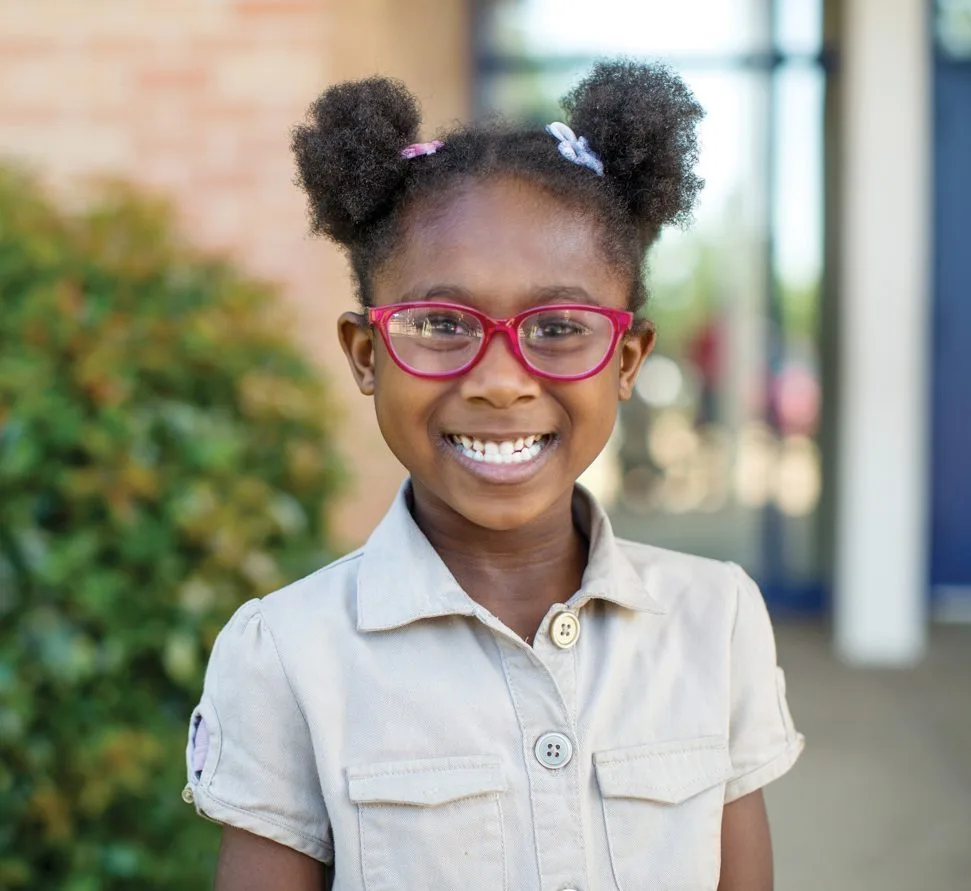
Story by Hailey Wist | Photographs Courtesy of Vision to Learn
Established in 2012, Vision to Learn delivers free vision care to children who need it most. The national nonprofit has extraordinary reach, providing screenings, eye exams, and glasses in low-income communities across the country at no cost to students or their families.
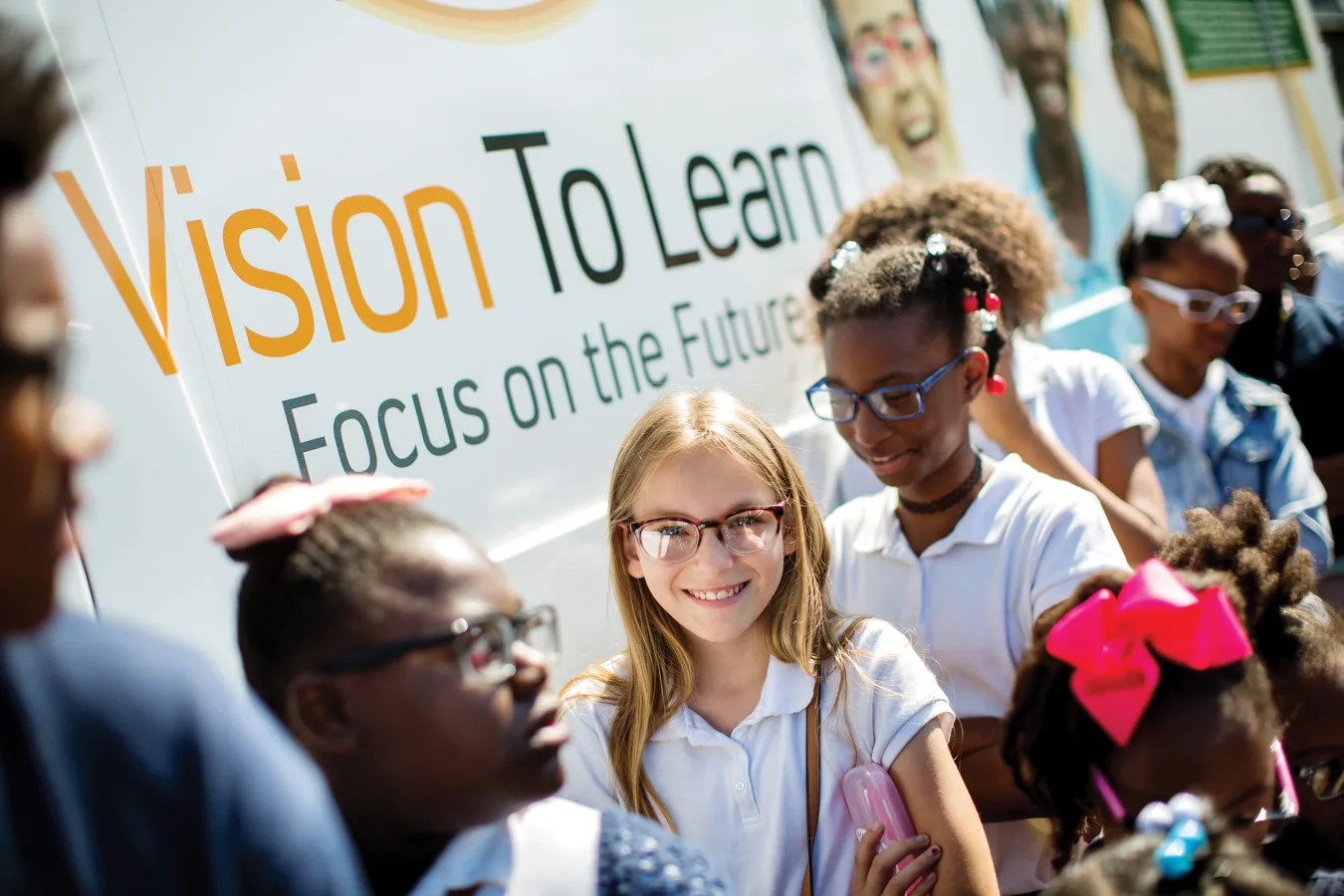
Rather than waiting for families to find eyecare, Vision to Learn brings the clinic to them. Each mobile unit is a fully equipped optometry office on wheels, staffed by licensed professionals and parked directly outside local schools. By removing barriers such as transportation, cost, and scheduling, the organization ensures that every child—regardless of circumstance—has access to the basic vision care they need to learn.
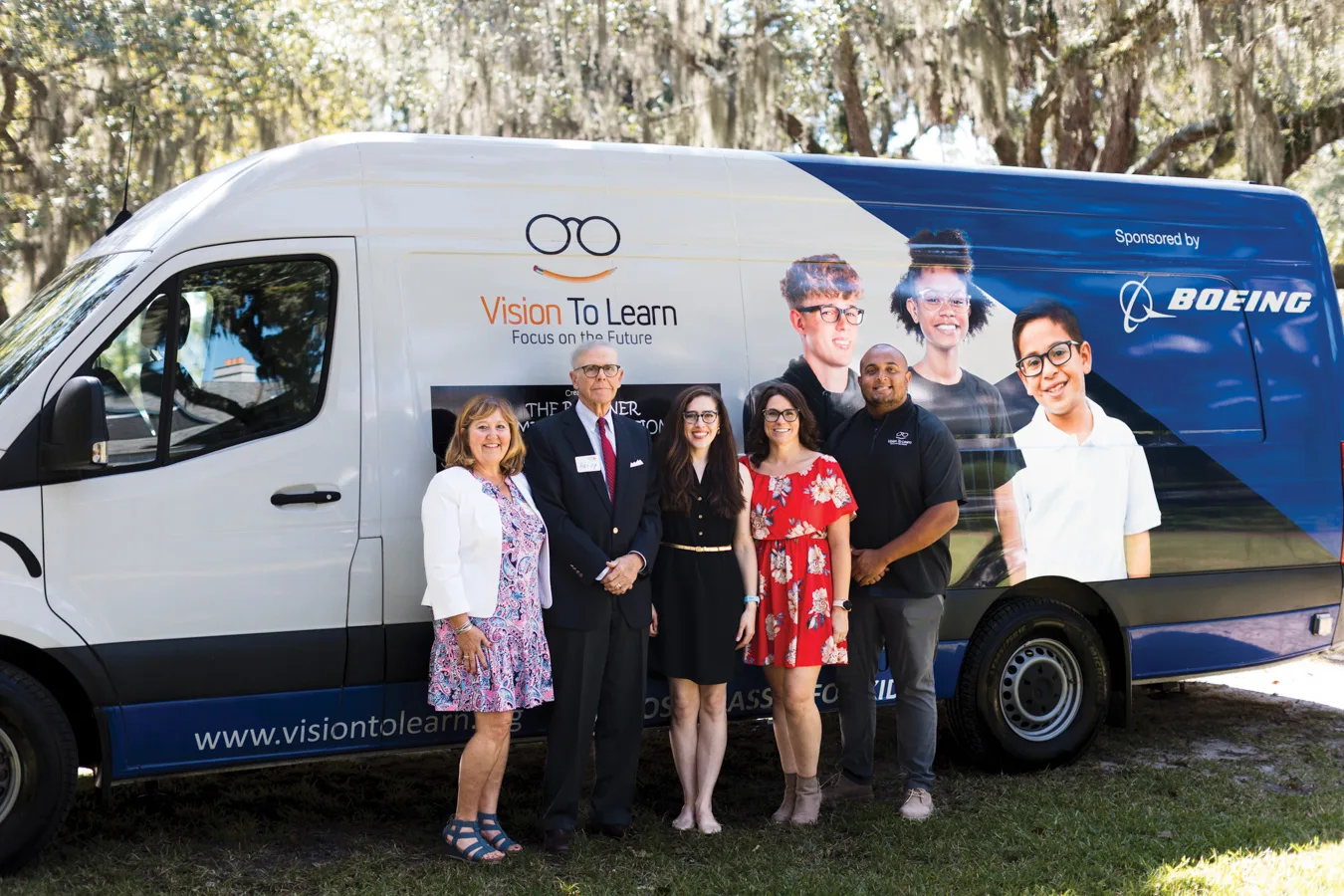
More than 3.5 million children have now been screened nationwide. Over 714,000 have received eye exams, and nearly 600,000 have been given glasses, all at no charge to their families. The program is lean and efficient: the average all-in cost for one child’s exam and glasses is about $150. Funding comes from a mix of philanthropic foundations, corporate sponsors, individuals, and public health partners.
Vision to Learn began working in South Carolina in 2021 through a partnership with MUSC Health and the Charleston County School District. In a state where one in four students fails a basic vision screening, poor eyesight is often mistaken for distraction or disinterest. A child who can’t read the board or follow the lesson slips quietly behind.
South Carolina Vision to Learn optometrist Dr. Nicole Nowling was previously a military doctor. She was drawn to the on-the-go aspect of Vision to Learn, the simplicity of the model, and the joy of working with young kids. “I love seeing their reactions. They are so cute and excited. And we have so much fun every day!” she says. “When we deliver glasses, it just warms my heart. The kids are like, Oh my gosh, I can see! It is really rewarding.”
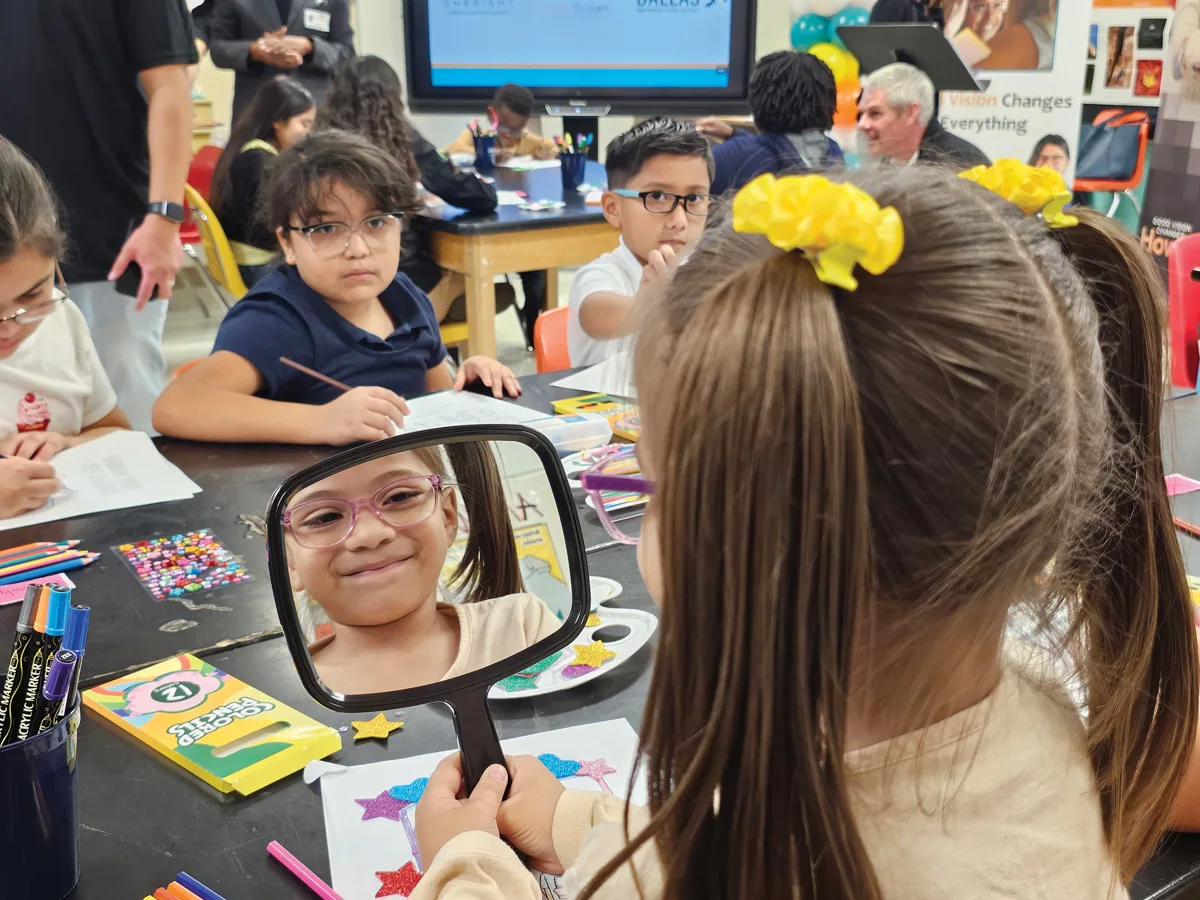
Studies show that providing glasses to students in need leads to measurable academic gains equivalent to four to six months of additional learning time. Students with uncorrected vision problems are more likely to engage in antisocial and delinquent behavior and have higher than normal levels of absenteeism. To contribute to the Vision to learn mission, Contact Poppy Green at Paul.Green@visiontolearn.org.
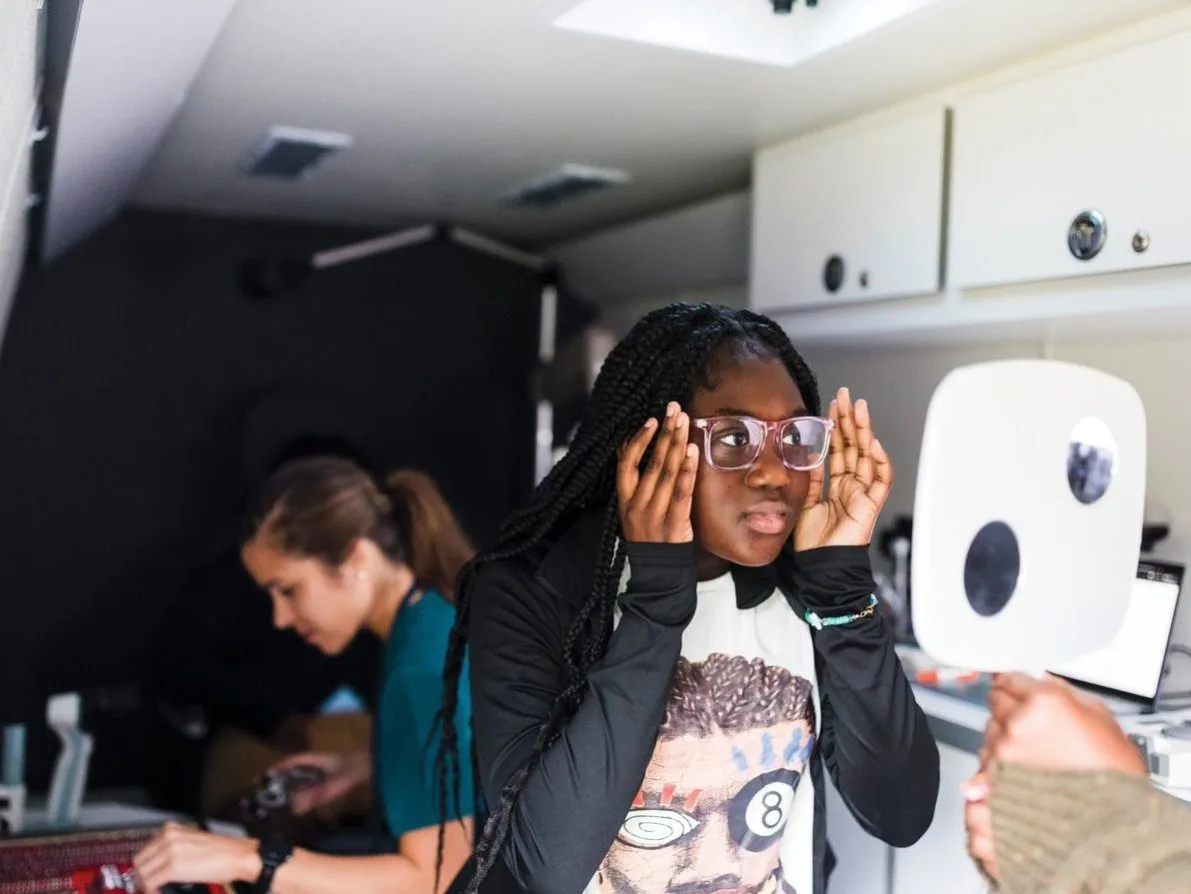
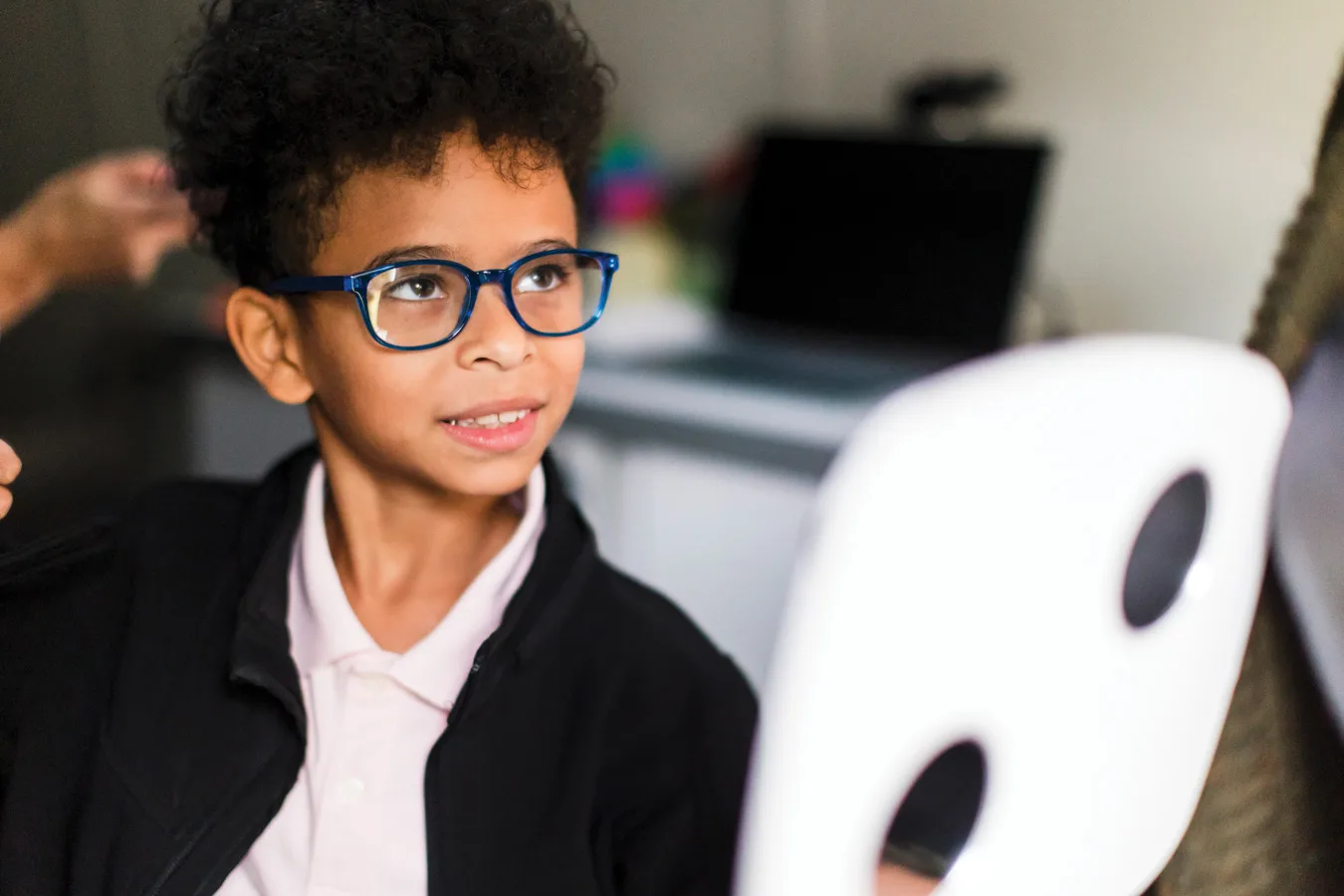
Vision to Learn’s simple but transformative model removes every obstacle between diagnosis and care. When a mobile clinic pulls up outside a Title I school, children who fail basic screenings are sent out in small groups. Each student receives a comprehensive exam inside the van, and if glasses are needed, they choose their frames on the spot. Within weeks, their new glasses are delivered to the school.
In just a few years, the results have been remarkable. Across Charleston County, Vision to Learn has conducted more than 10,600 eye exams and provided over 8,600 pairs of glasses. In nearby Dorchester County, the numbers stand at about 4,200 exams and 3,600 glasses distributed. School nurses overwhelmingly support the effort—96% say the program fills a critical gap in care for their students. “Children can’t learn if they can’t see,” says volunteer Henry Blackford. “The mission at Vision To Learn is to make sure all of these students have the glasses they need to succeed in school and to improve their quality of life.”
In classrooms across South Carolina, teachers have begun to notice the difference. Students who once squinted at the board are now raising their hands. Children who used to fall behind on reading assessments are improving within months. Vision to Learn’s work is not just about eye health—it’s about giving students a fair chance to participate, to focus, and to thrive.
Vision to Learn operates through a combination of philanthropic support, partnerships with school districts, and institutional collaboration. In South Carolina, the partnership with MUSC Health and the Charleston County School District has been key to the program’s growth. Funding remains a mix of private and public support. Charitable foundations and individual donors make up the majority, while state agencies and Medicaid help sustain ongoing operations. The organization’s structure allows for efficiency and accountability—each dollar goes directly toward exams, glasses, and staffing.
The need is still far greater than the reach. Thousands of children across the Lowcountry and throughout South Carolina continue to attend school with undiagnosed vision problems. Scaling up will require more funding, more vans, and more partnerships across districts. But the success so far shows what’s possible when access meets efficiency.
The model works because it is both practical and personal. The work will continue one child, one school, one van at a time. It is a reminder that philanthropy need not be impersonal or grand to be meaningful. Sometimes it is a small clinic parked beside a school and a child who, for the first time, can see her own handwriting in perfect clarity.