Oh, what shells inspire! These poetic words are part of a sweet little book published in 1955, Gift from the Sea by Anne Morrow Lindbergh. The beachside essays are about the patience, openness, and solitude gleaned by paying attention to seashells and the ocean. Such thinking about shells, and life, begins with a natural attraction to the seaside. It’s a familiar feeling for so many of us to be drawn to walk at the ocean’s edge, watching the sand as we step. Sometimes, a shape or a glint catches our attention. Or while sitting on a beach chair or blanket, we begin sifting the sand beside us—letting soft handfuls pass through our fingers.
Story by Sandy Lang | Illustrations by Lia Burke Libaire
“Moon shell, who named you? I shall give you another name—Island shell. I cannot live forever on my island. But I can take you back to my desk… You will sit there and fasten your single eye upon me. You will make me think, with your smooth circles winding inward to the tiny core, of the island I lived on for a few weeks. You will say to me,‘solitude.’”
Before long, what’s this? An ancient, worn oyster shell, or maybe a shiny and delicate Jingle shell, the translucent spheres sailors called “ mermaid toes.”
Each shell is a mini sculpture with its own weight, design, smoothness, and color. Sometimes our curiosity takes over. We hold one to our ear to see if we can hear the ocean, as if the sound of the sea itself might live inside.
Before washing up clean and empty with the waves, each seashell was essential to the life of an animal. They are the external skeletons of once-living mollusks, the protective armor and home formed by the mollusk itself. Shells are primarily composed of calcium carbonate from the seawater, mixed with minerals, proteins, and pigment. More than 100,000 species of mollusks exist around the world, with about 1,000 of those in the Carolinas. (Squid and octopus are also in the mollusk family, but don’t create an exoskeleton.)
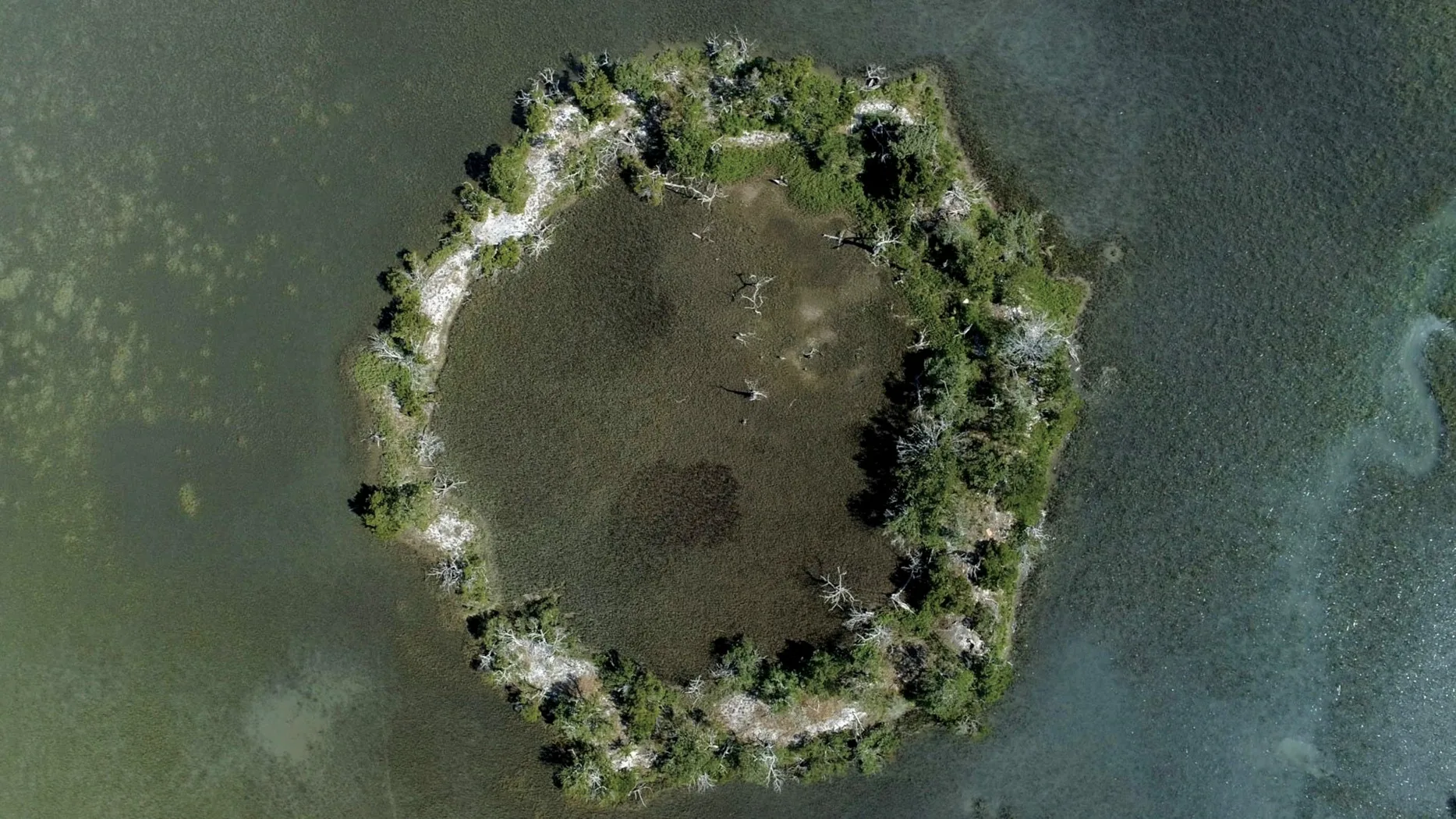
The Fizg Island Shell Ring
Located near Edisto, THE FIG ISLAND SHELL RING is one of the largest and best-preserved shell rings in North America. Built more than 4,000 years ago from layers of oyster, clam, and whelk shells, it offers a glimpse into the lives of the region’s early coastal inhabitants. The South Carolina Department of Natural Resources owns and protects Fig Island Which is closed to all public access. photograph by Jamie Koelker, Koelker & Associates, LLC.
In the Lowcountry, seashells are a common sight—the bivalve mollusks have two shells, including the clams and oysters that end up on our tables. Single shell mollusks are gastropods, including whelks and lettered olives (the South Carolina state shell). Whatever the shape or color, by the time a shell is found at the beach, it’s a remnant of a life. The mollusk is usually long gone—having died days, centuries, or even millennia earlier.
The durability of some shells around our creeks, marshes, and beaches is legendary. Prehistoric piles of shells known as “middens” often still remain. In Awendaw, the Sewee Shell Ring rises 3-10 feet above the marshland, and is about 225 feet across. The massive ring edges the salt marsh and was built of oyster shells about 4,000 years ago by Native Americans. A neighboring mound of clam shells dates back about 800 years. One theory is that the shells were kept for everyday uses as tools or ornaments, but the details aren’t known. Was there a ceremonial purpose? That adds to the fascination.
Other lasting shell structures include the oyster “tabby” construction of the 1700s and 1800s in Charleston, Beaufort, and on several Lowcountry sea islands. Francois Alexandre Frederic, a French aristocrat who visited Beaufort in the 1790s, described seeing “le taby” poured into wooden forms to create walls. And many tabby structures still exist today, fabricated from a lime made from crushed oyster shells and water, typically with many whole oyster shells mixed in.
Over on Sullivan’s Island, contemporary artist Dawn Nakamura had been curating arrangements of butterflies under glass domes inspired by German Wunderkammer “cabinets of wonder.” One day, she opted to try something similar with shells. She loved the results. “When shells are under glass, the effect is almost like an aquarium,” Nakamura explains.
With a background in home furnishings and interior design in New York City, Nakamura says she’s been inspired by living on a barrier island in recent years, “with the beach in one direction and an estuary in the other.” Her recent projects include shell-based, layered designs along fireplace mantels, around mirrors, and on the moldings of bookcases. And she’s begun making shell jewelry that includes gemstones and pearls.
She’s also influenced by historical references, including the Shell House on the Ashley Hall campus. The former aviary is now a lounge for senior students at the school, and features a shell grotto exterior, covered in large conch shells. “It’s a beautiful lost art,” Nakamura says.
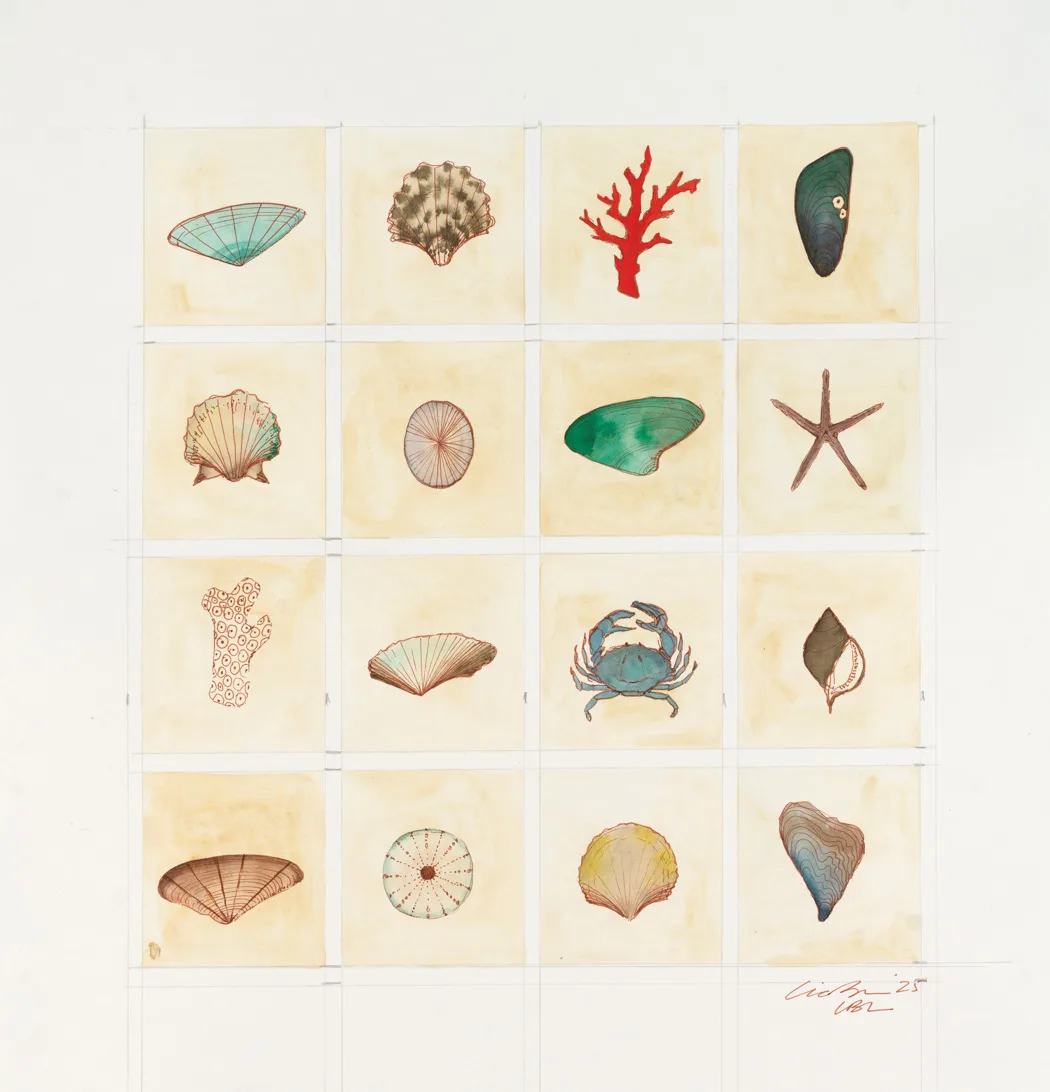
For visual artist and designer Lia Libaire of Charleston, nature has likewise held her fascination. She grew up by the ocean in Massachusetts and says that she’s long been inspired by scientific prints and book plates—especially of botanical subjects, and then shells.
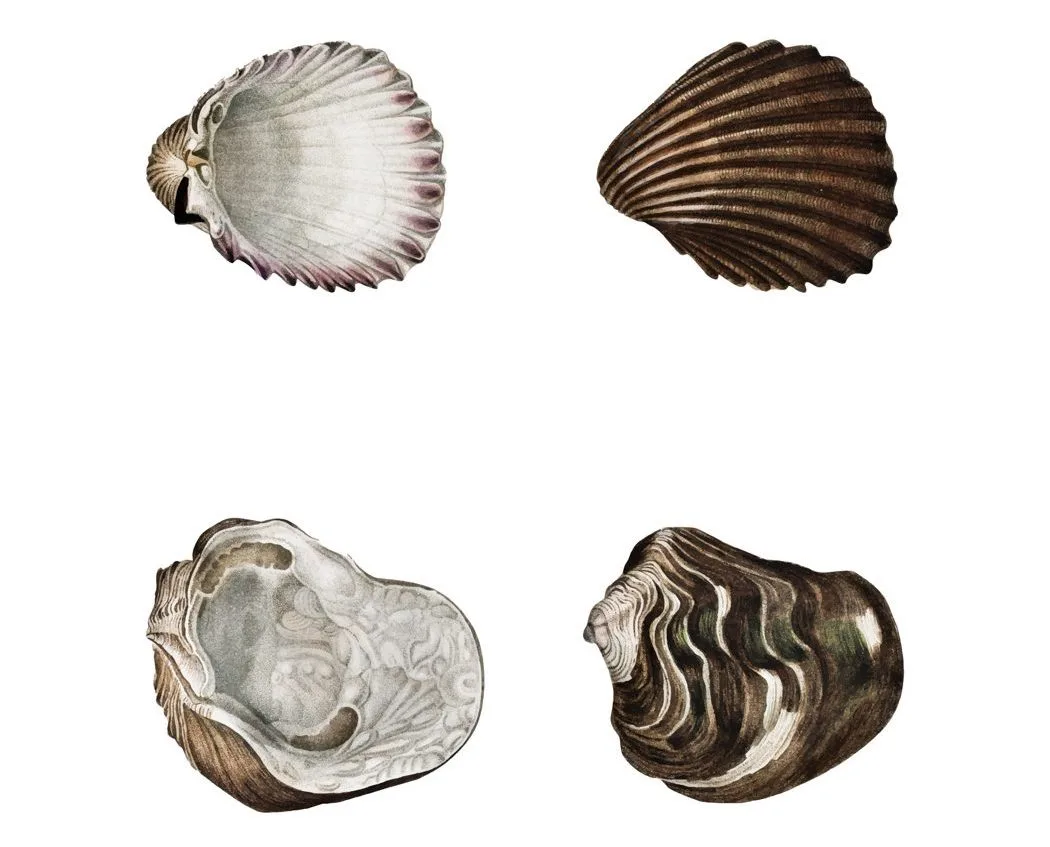
The Bivalve
The form of a shell is a study in function and adaptation. In clams and oysters, the curved, hinged structure protects the soft body within while withstanding the constant pressure of waves and shifting tides. Their ridges and contours are not ornamental but engineered by evolution—each groove strengthening the shell, each fold reducing drag and anchoring the animal in sand or to other shells. Oysters fuse into reefs that buffer shorelines, while clams burrow for stability, their shapes perfectly tuned to the demands of their environments. The architecture of a shell is nature’s design for endurance, efficiency, and resilience.
“I’m drawn to things that are recognizable and timeless,” Libaire says. “I keep a huge collection of old books and scientific prints.”
Her paintings of shells have a bit of the feel of a scientific study, but with the softness of watercolor. And besides her original art pieces, she’s created shell wallpaper designs as the co-founder and artist behind textile company Brier and Byrd. One of her sought-after designs, “Shellz,” is on a grasscloth base.
“They are incredible looking, from nature,” Libaire says of seashells, something she’s appreciated since she was a young girl. “Anyone who likes shells probably resonates with nostalgia and has core childhood memories of shells.”
The Moon shell (or Shark Eye), described in Gift from the Sea, is one of many spiral treasures that wash ashore in the Lowcountry. “You can find moon snails, lettered olives, banded tulips, whelks,” says Captain Elliot Hillock, boat captain with Kiawah Island Club. “And the coquinas look like a bunch of little polished gems which are all different colors, pinks and purples and everything in between.”
Hillock grew up on Kiawah and knows the tides and sandbars like an old friend—familiar but always shifting. “After a strong storm comes through, it’ll push shells from the Atlantic right up on the sand. Low tide, especially a negative tide, is when you’ll find the most.”
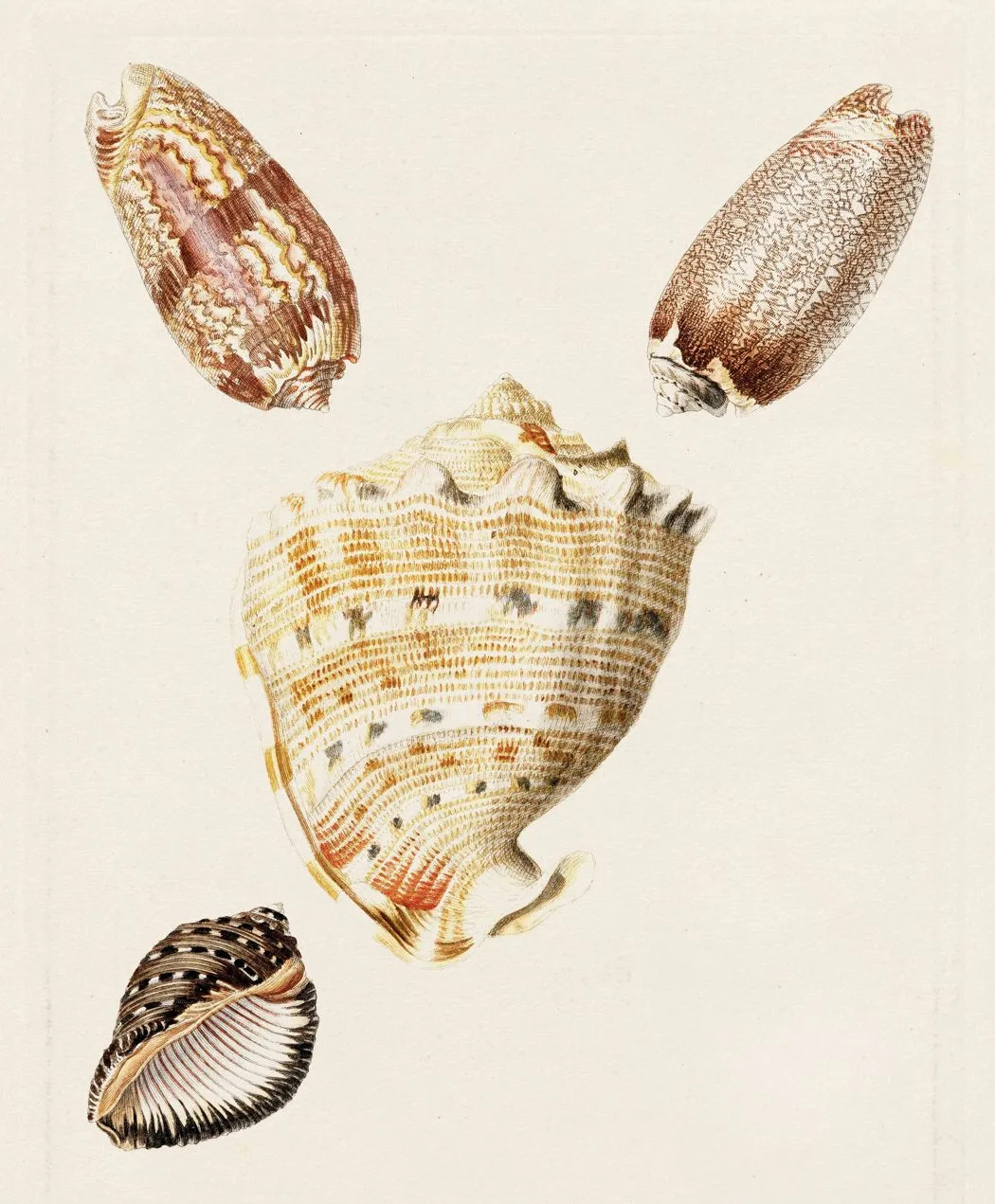
Hillock often takes guests out by boat, timing his trips around those ideal tides. “It’s an easy fifteen-minute tootle from Rhett’s Bluff over to Bird Key in the Folly River,” he says. “There are big shell banks over there—mostly oysters, but all sorts of other shells mixed in.”
Guests are encouraged to collect responsibly—keeping only a few shells. The rest are returned to the sand, part of the natural cycle that continuously reshapes the Island’s shoreline and feeds its ecosystem.
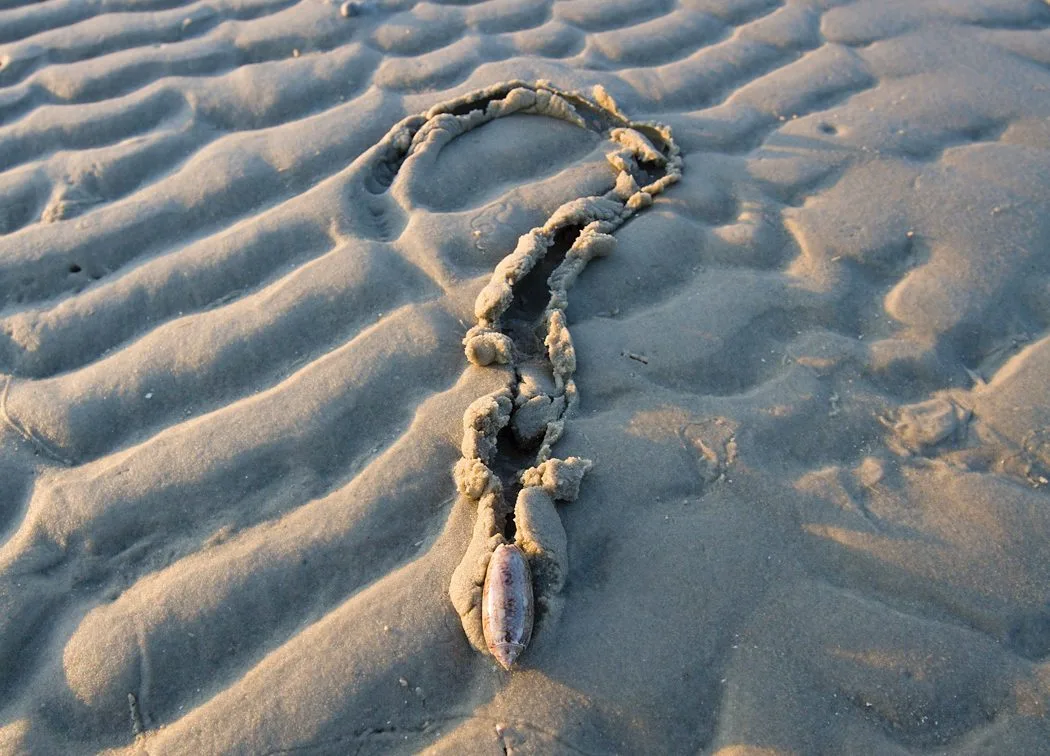
The Lettered Olive
The lettered olive, South Carolina’s state shell, is a small but striking emblem of the Lowcountry’s coast. Sleek, patterned, and highly polished by nature, it moves just beneath the surface of sandy tidal flats, burrowing with a quiet precision. Beyond its beauty, the lettered olive reflects the rhythm of the coastal ecosystem—dependent on clean, shifting sands and healthy tidal flow. Its presence signals an intact and balanced shoreline. Once prized by early collectors for its intricate markings, it now stands as a symbol of the region’s natural heritage and the delicate interdependence that defines life along the coast.