



The Alchemy of Cassique
In 1995, just two years after Kiawah Island Club was founded and River Course opened, Membership had grown, and it was time to begin planning a second Club course. To do so, the Kiawah Partners’ design and development team was given a very specific directive: Make it great! What followed over the next twenty-five years was a magical mix of serendipity, creativity, and collaboration that produced one of Kiawah’s most distinctive golf communities.
Story by Katherine Barry Verano | Photographs by Patrick O’Brien, Mark Permar & Steve Uzzell
In 1998, Kiawah Partners acquired a 450-acre parcel just southwest of Kiawah’s main gate. Despite the site’s proximity to Kiawah, this off-island landscape was quite different. Where Kiawah was dense maritime forest, this land was flat, open tomato fields. That presented the team with a challenge… and an opportunity. “Historically, we start with a good understanding of the land. That’s what differentiates us from other developers,” says longtime Kiawah land planner and architect Mark Permar. “At Kiawah proper, we’d delicately move things around within the natural framework, but here we had complete freedom, and that was a little scary at first. It was a blank slate, and the whole team had to figure out how to make sense of that.”
The objective was to create a complementary course with completely different play characteristics than River Course. “The way you do bunkers defines the visual aspects of your golf course,” says Charlie Arrington, Kiawah Partners’ Director of Design and Planning. “We had River Course, which was a modern classic style, so I said how about a links look?” Links-style is not something you’d typically find in the South, but the development team had just returned from Scotland and Ireland with the lore of links golf fresh in their minds. They put that experience to work, taking inspiration from such legendary courses as Turnberry, Ballybunion, and St. Andrews, and from another links legend who happened to be in the right place at the right time.
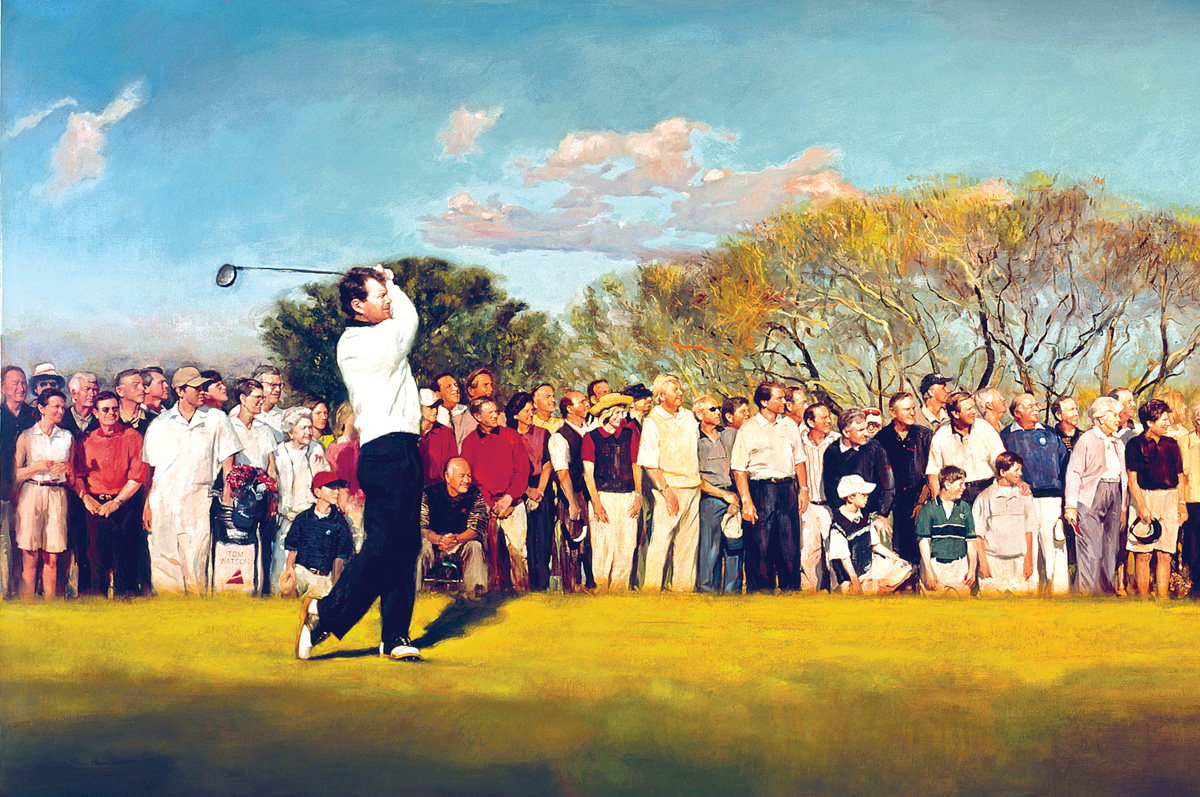
Enter Tom Watson, the five-time British Open Champion and budding golf course designer whose career was made on links-style courses. It was serendipitous that during their planning, the team learned Watson was visiting Kiawah with friends. “I got the call that Tom Watson was here, and the Partners wanted me to play golf with him,” recalls Charlie. “Tom was just starting his design career, and we thought: what if this new course could be his first solo design in the U.S.?” And, as fortune would have it, that’s just what happened.
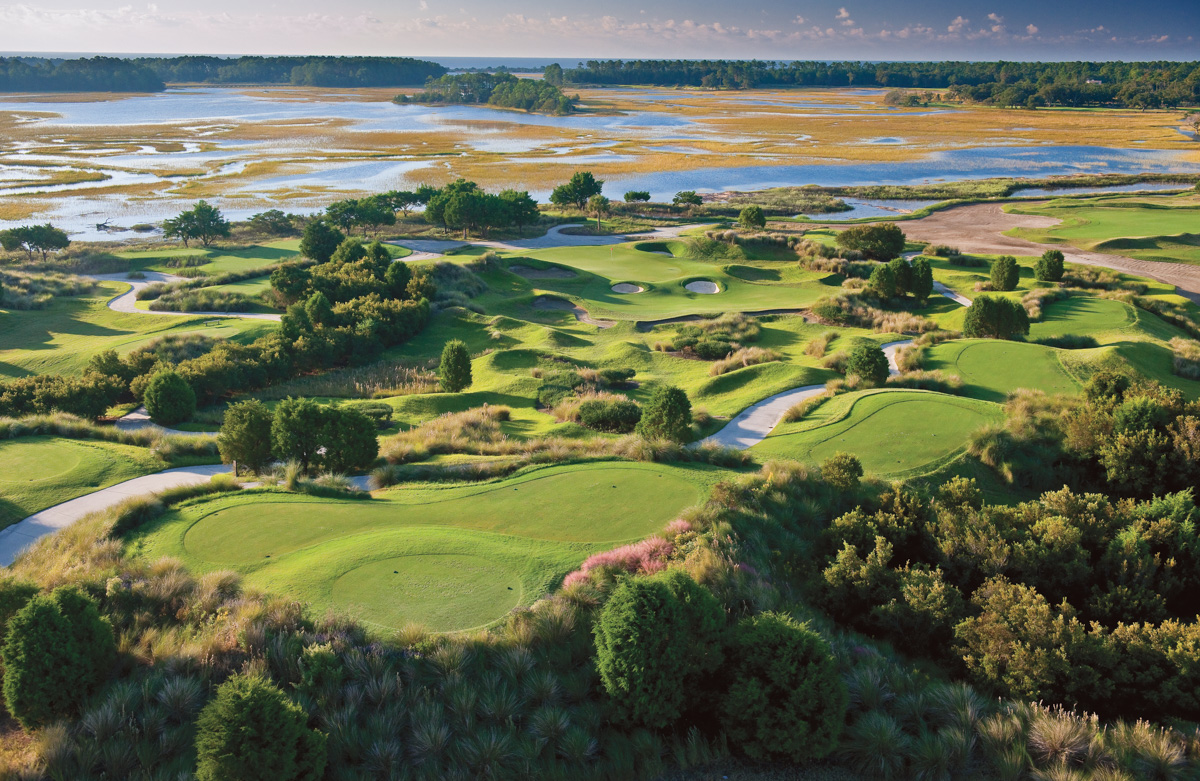
With Watson on board, the team began crafting the course. “I flew out to Tom’s ranch, and we sat at his dining room table reviewing the massive gradient plan,” recalls Charlie. “We had all this width to play with, so Tom said, “Let’s have fun with it!” That fun resulted in a creative course design that included spectacle bunkers à la Carnoustie, a St. Andrews-inspired “hell bunker” based on the infamous 14th hole sand trap, and an inventive routing plan for the front nine that was part form, part function; Cassique is unique in that the “front nine” is actually ten and a half holes. “I’d always fantasized about designing a course that played two different directions,” remembers Charlie. “So, I sent a stick diagram of my idea to Tom, and he said, “Let’s do it!” The outcome was a routing plan for holes four, five, and six that allows for alternating play paths.
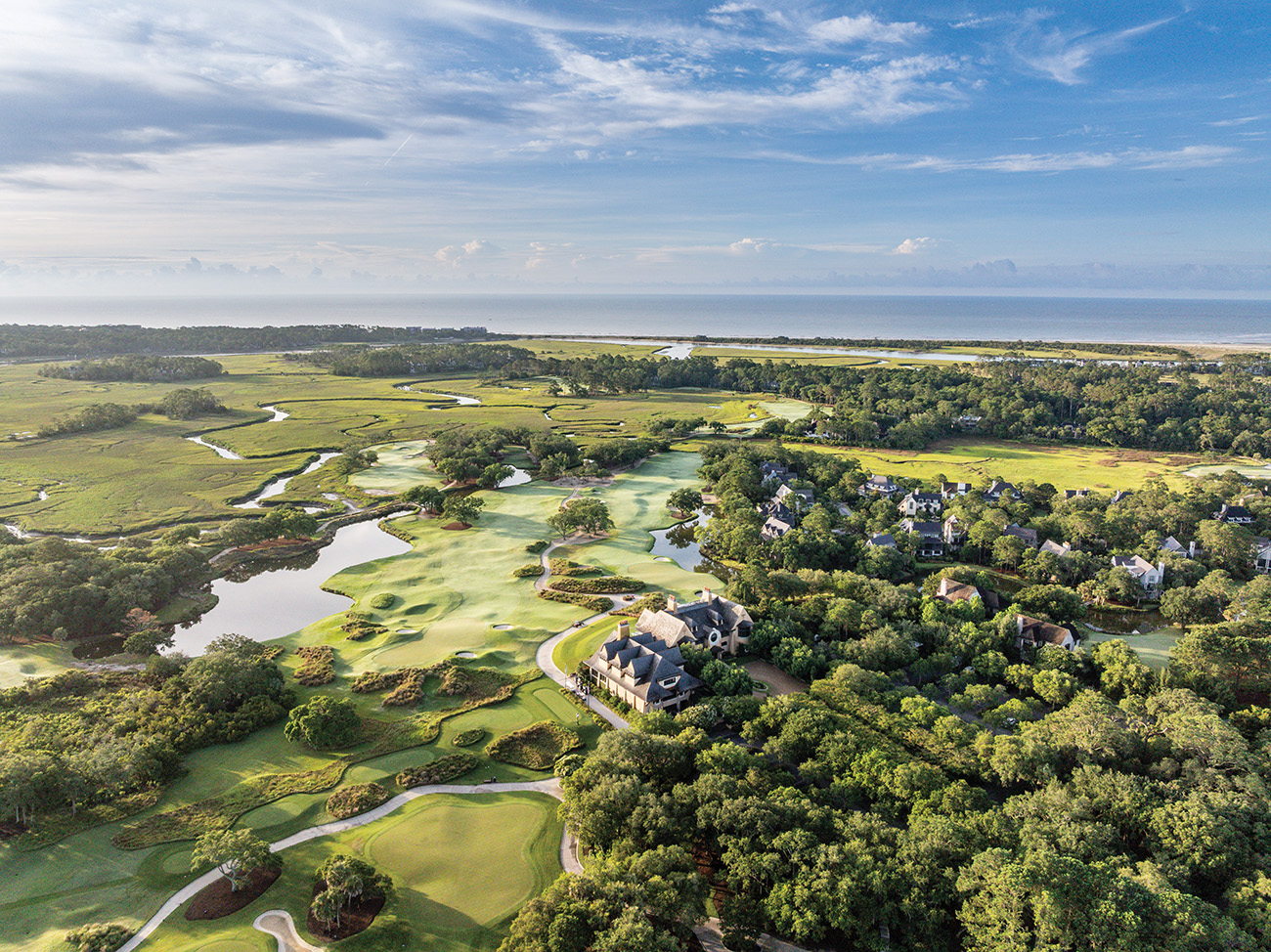
Adapting a links golf concept to the Lowcountry climate and soil conditions was no easy task, especially considering the land’s characteristics. It took major engineering to create the elevation and character that is now intrinsic to the par 72, 7,050-yard course. “It was really something,” recalls Mark. “The front nine was like a big sandbox, and there were huge machines moving it around. It was like we were shaping it with a spoon!”
Construction began in 1998, and when the course opened in 2000, the team had moved nearly a million cubic yards of dirt (from forty-five acres of lakes), transplanted sixty-six trees utilizing the country’s largest tree spade, and built a forty-four-foot high artificial mound affectionately dubbed “Mount Watson.” It was one of many creative solutions the project demanded. “The whole edge of the marsh was lined with cedar trees, and so from the ground, you couldn’t see what the view was going to be,” recalls Mark. “We had a contractor bring in a lift and finally got up high enough to where we could see the beauty of the marsh. It was pure magic!” Charlie concurs, “It really is a magical place… and probably everybody’s favorite par three.”
A specific DNA was beginning to emerge at Cassique. It carried with it the notion that the built environment, like the golf, could be shaped by Old World design philosophies. It was a bold idea, but the team took it to the drawing board. “I was familiar with the Arts and Crafts movement of the late 19th century and had a book about the architect C.F.A. Voysey,” recalls Mark. “I found a few images in there that I thought could prompt discussion and prepared a presentation around it.” Little did anyone know that the Voysey book would not just provide inspiration for the clubhouse, it would provide a blueprint. “I had this book marked with a couple of sticky notes and was building my case slowly when suddenly the book flies open to a Voysey house, and Leonard Long (former Executive Vice President of Kiawah Partners) says: “That’s it!’’ The risk of employing such a definitive architectural style was inherent, but the star-studded design team—that included architects Shope Reno Wharton; landscape architecture firms DesignWorks, Ohme Van Sweden, and Wertimer & Associates; interior designer Jackye Lanham; and New York-based architect Peter Bentel—fully embraced the concept (and challenge).
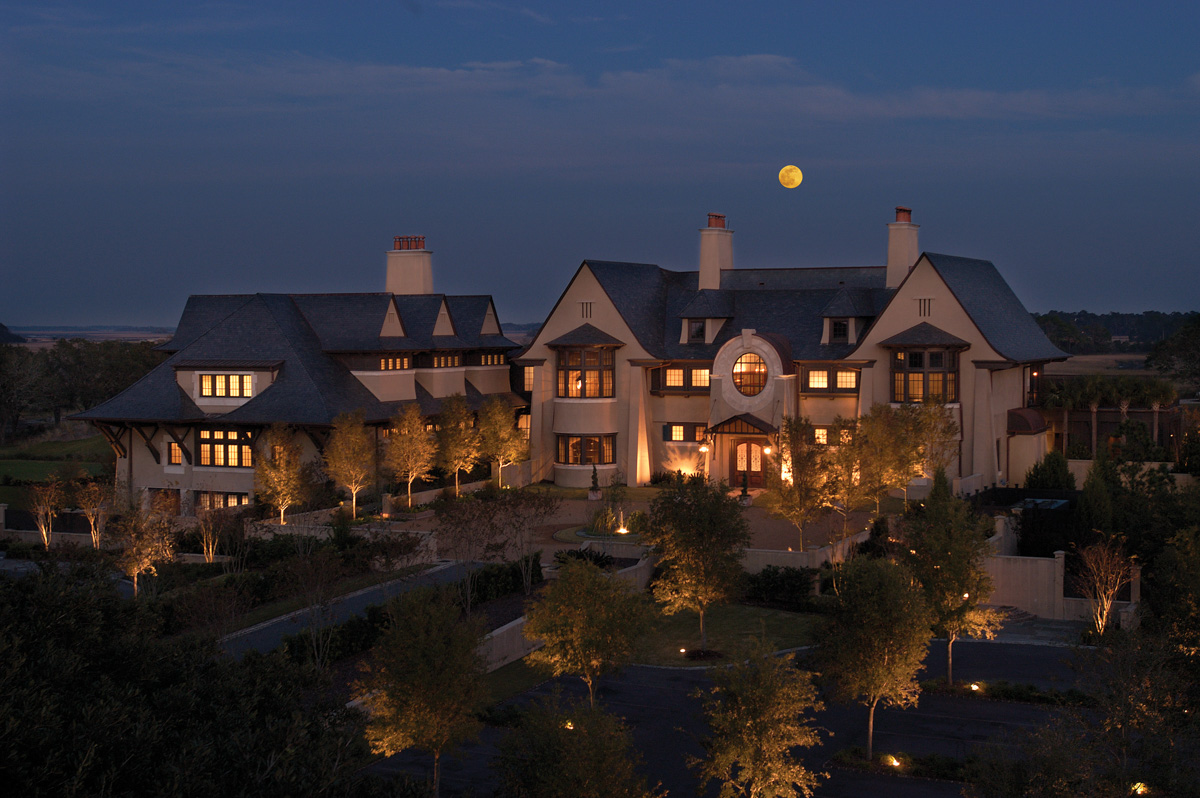
Reminiscent of a 19th-century English country manor, the Voysey-inspired clubhouse has commanding golf and tideland views, and at 30,000 square feet is a commanding presence itself. Its distinct style has had a lasting impact on the surrounding community, and its influence has feathered out in varying interpretations for Club amenities, residential offerings, even landscape design. Following the Designing with Nature playbook, the trees and hedgerows of the British countryside inspired the planning, but live oaks, cedars, and native shrubs were used to create habitat and privacy. Wertimer’s clubhouse garden, for example, is a lovely example of how the team blended Cotswolds composition with Lowcountry native species.
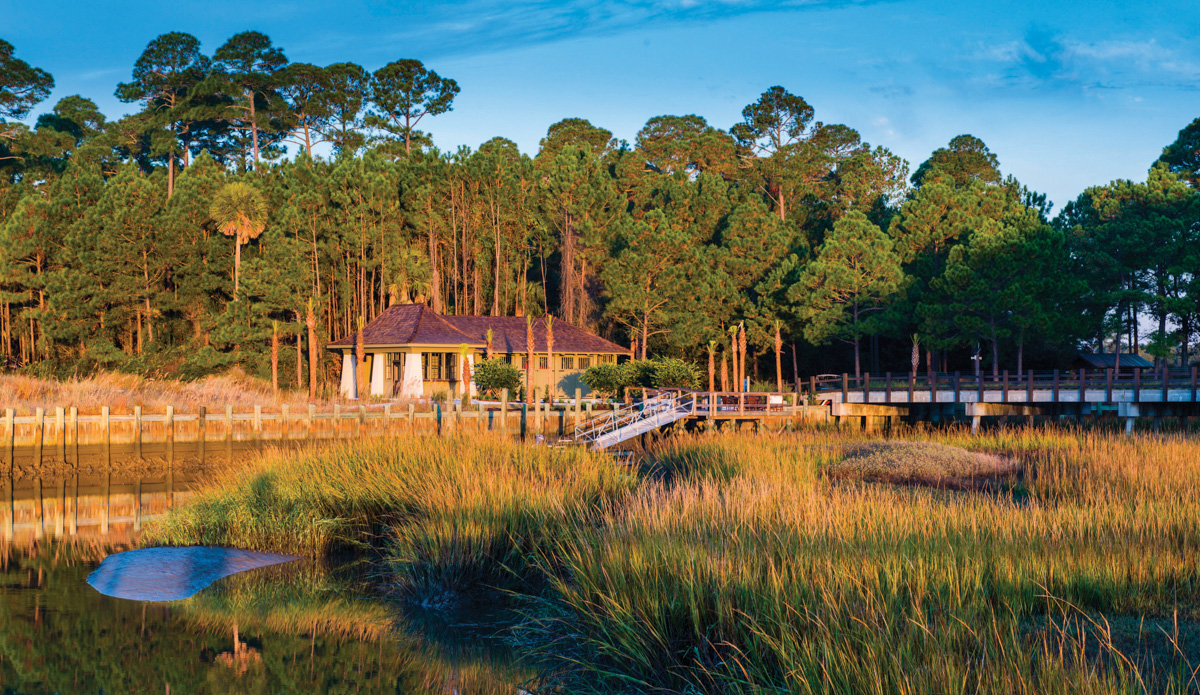
But as Mark reminds us, the work isn’t over when the clubhouse opens. Great places must evolve to remain great, and South Street Partners, who took up the mantle of development in 2013, has guided Cassique’s evolution for the last thirteen years. Part of that evolution included enhanced Club programming and new facilities like the Golf Learning Center. “Activity begets activity,” says South Street Partners’ Jordan Phillips. “One of the first things we did at Cassique was expand Club programming. Those initial upgrades really created a buzz.” Building on that momentum, the company also made strategic adjustments to the residential design process, launched a custom builder program, and added new residential opportunities like the Clubhouse Village. “Cassique Clubhouse Village was a big part of our early success,” says Jordan. “Having that walkability to the clubhouse was an important component of the community.” The evolution has been well received, a fact that steadily rising property values confirm. “It’s surreal to think about how far we’ve come,” adds Jordan. The team will bring this formula for success to bear in development of its upcoming off-island development at Orange Hill, which will include an 18-hole golf course plus residential.
“The best projects emerge when the entire team buys into a shared vision and freely contributes ideas,” muses Mark. Because of that shared vision and a long-term development approach, Cassique has aged exceptionally well over the last quarter-century. The golf course has been refined over time. The architectural style has softened a bit and integrated more with the landscape. And Tom Watson’s philosophy of creating “fun golf shots” has proven enduring. Cassique was a bold experiment, one that ultimately succeeded through creative execution, collaborative teamwork, and thoughtful evolution. The crafting of Cassique occurred 25 years ago at the intersection of serendipity and alchemy, and the everlasting result is pure gold.
Cassique’s Timeline
The Last Drive
From the onset, the original developers made a conscious decision to prioritize the integrity and experience of golf at Cassique. It meant a lower residential density than planned, and very few holes that are double-loaded with residential properties. That golf-first approach was a unique model that South Street Partners carried forth. “Golf was always the lead story,” says Mark. “What we did differently was find great residential sites that worked with golf as the lead. These weren’t just residential sites on a golf course, but residential sites on a golf course that overlooked the marsh or inlet.”
That distinguishing philosophy set a course for limited property releases over time, a strategy that South Street Partners has not only embraced, but enhanced. Twenty-five years later, South Street Partners is releasing the final developer properties at Cassique. The homes of Upper Burn represent the last chapter in a quarter-century story of focus and dedication. Their prime placement along the opening holes of Watson’s links-style design is a gentle reminder of what makes this community special: a transcending reverence for the game of golf and a deep appreciation for the natural landscape.